Built This in Thailand… But There’s a Big Problem 🇹🇭
AI Summary
Michael, who has a daughter named Aurelia turning 10 in April and hasn't seen her for about seven years, shared his life story, including his journey from financial services in New York and Singapore to developing a resort in Thailand. He admitted he wasn't ready to be a father at the time and takes full accountability for the situation that led to him not seeing his daughter. He described the family court process in Singapore as a profound and difficult chapter, wishing it upon no one and expressing a desire for reconciliation. He hopes that his renewed self can be a good figure in her life and that forgiveness from all sides can lead to a positive outcome. He believes pain is a great teacher but prefers to learn without it, and hopes this interview might be a way of reaching out to Aurelia for her 10th birthday.
Before his current venture, Michael worked in financial services for two large banks, initially in New York. After five years, he realized he couldn't continue that lifestyle, feeling like he was on a "treadmill" and wasting time. He then moved to Singapore with the same firm for a change of location. His transition away from his career was gradual, involving side projects like renovating his apartment in Singapore and two projects in Warsaw, Poland, which built his confidence. The resort opportunity in Thailand arose during COVID-19.
Michael's resort, Hideaway Village, is a significant undertaking, which he describes as the biggest thing he's ever done. He is Polish-American, and his wife is Singaporean, who has been a major part of the project. The business operates under a 49-51% ownership structure, with Michael as a half-owner, working closely with a Thai family. Establishing trust with his Thai business partners was crucial, especially given the substantial capital invested in land, which can only be owned by Thais. He met his business partner's husband early one morning after an experience that convinced him to buy land in Pai. He emphasizes the importance of good relationships, cultivating them through shared holidays and gifts, as risk management is a priority for such a large capital deployment. He also believes in karma, given Thailand's Buddhist culture, and strives to operate with good intentions.
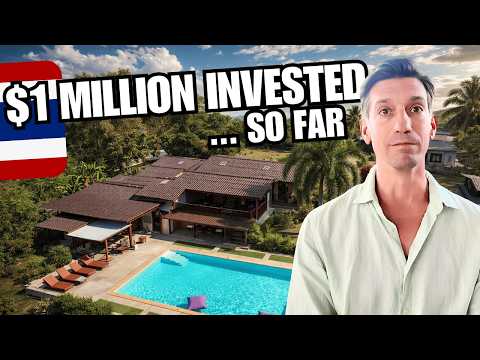
The Hideaway Village property is 13.5 rai. Michael estimates the land value in Pai to be around 1 million baht per rai, making the land component alone about 14 million baht. The total value of the resort, including all structures, is estimated to be in the 40 million baht range, or about one million US dollars. He doesn't plan on selling it due to the "blood, sweat, and tears" invested.
The local community has received Michael and his development well. He states that he does everything legally and makes donations to charitable causes, which has earned respect from the locals. He acknowledges that there are tensions in Pai, often stemming from "rambunctious tourists" of certain demographics, but believes Pai is a good mix and that "things go through waves." He views his investment in the resort as a better option than "paper stocks" in the Western world, having shifted his focus entirely to the Eastern end.
Michael has backup plans and other investments, emphasizing the importance of diversification and a secure financial foundation, which allows him to take on a project like this. For Hideaway Village, his primary goal is not to make a profit but to run it, focusing on the experience for guests and himself, as it is also his home.
When asked about his biggest mistake, Michael admitted to being his own worst enemy, often starting projects and not finishing them, though he appreciates the freedom to do so and return to them when the time is right. He shared a story about dealing with a neighbor who threatened to cut down three coconut palms near his garage construction. After some negotiation and communication, Michael started buying coconuts from him, and now they have a good relationship.
Upon his arrival, the property already had three traditional-style bungalows, named Fran Japani, Palm One, and Palm Two, built about 15 years ago by an English couple who ran it as Quinnland's Resort. Michael views these as a valuable inheritance. The pool was also present but required significant renovation, costing about 1 million baht for lining, repiping, and adding a saltwater chlorinator. This was an unbudgeted expense, as was the full extent of his vision for expansion. However, he notes that some things, like digging a pond, were relatively affordable. The deeper he got into the project, the more he realized the need for permaculture systems, water pumps, filters, and a backup generator, all contributing to increased costs.
Reflecting on whether he would do it again, Michael said he would "flip a coin." While very happy with the current state, the "blood, sweat, and tears" and challenges make him hesitate. He doesn't regret it but acknowledges that hindsight is 20/20. Ultimately, he finds it rewarding to see the benefits and experiences for guests and himself, viewing it as harvesting the fruits of seeds he planted.
The resort offers different room rates: the budget-minded Maple and Willow bungalows range from 1,500 to 1,800 baht, while the deluxe offerings start from 2,000 baht and can go up to 3,000 baht during busy seasons. Staff are a mix of locals from the village and those from Pai, with housekeeping from Pai and the head of engineering and gardening from the local village of Tintat.
Michael concluded by inviting people to visit The Hideaway Village and expressing hope that his daughter might visit him there one day, emphasizing the love he has for her and his wish for reconciliation for anyone in a similar situation.