“Hatred Towards Christians?” - IDF Soldier UNDER FIRE Over Jesus Statue Destruction
Audio Summary
AI Summary
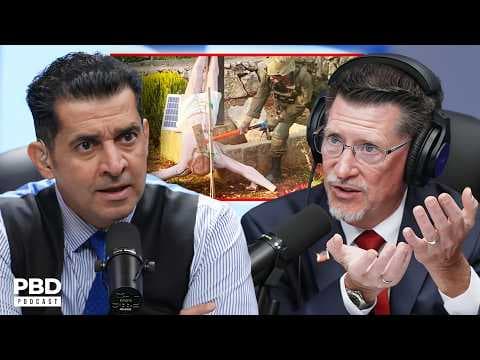
A photo showing an Israeli soldier smashing a Jesus statue in Lebanon has sparked widespread outrage online. The image, which garnered 5 million views on one account, was confirmed as authentic by the Israel Defense Forces (IDF) in a statement on Monday. The IDF stated that an initial review determined the photograph depicted an Israeli soldier operating in southern Lebanon, where Israel launched a ground invasion last month, coupled with aerial bombardment, as part of its joint war with the US. The military added that an investigation has been opened, and appropriate measures will be taken against those involved based on the findings.
Palestinian members of the Israeli parliament reacted strongly to the incident. Iman OD sarcastically commented that they would "wait to hear the police spokesman claim that the soldier felt threatened by Jesus." Ahmed Taibbe also commented, suggesting that "perhaps these racists have also learned that Donald Trump asked referred to US presidents controversy including the."
The IDF's official tweet acknowledged the incident, stating it was determined that the photograph "depicts an IDF soldier operating in southern Lebanon." The IDF expressed that it views the incident with "great severity" and emphasized that the soldier's conduct is "wholly inconsistent with the values expected of its troops." The incident is being investigated by the northern command and addressed through the chain of command. The IDF also stated its intention to assist the community in restoring the statue and reiterated that its operations in southern Lebanon aim to dismantle Hezbollah's terrorist infrastructure and have "no intention of harming civilian infrastructure, including religious buildings or religious symbols."
The incident occurred in the village of Debel, near the Israeli border in the Bin Jabil district, which is home to one of the oldest Christian populations on Earth. The statue belonged to a Catholic church, and local residents posted a photo of the intact statue alongside a quote from the Gospel of Luke 23:34, which reads in Arabic, "Father, forgive them for they know not what they do."
While acknowledging that this incident does not reflect all soldiers or Israel, a speaker highlighted that it is not an isolated event. In 2024, the IDF reportedly destroyed the church of Duraya, killing eight people. Another incident in 2024 involved the alleged bulldozing of a St. George statue in a town near Yaun during operations in the same region. A video was shown depicting the bulldozing of a St. George statue, emphasizing that St. George represents faith and love.
The speaker stressed that these incidents are occurring in southern Lebanon, not Gaza, and questioned Israel's mission in Lebanon, particularly the destruction of a Jesus statue. While acknowledging Hezbollah's presence, the speaker found the act of smashing a religious symbol to be "disgusting" and unrelated to the mission of combating Hezbollah. The speaker expressed curiosity about the "hatred towards Christians," contrasting it with the perceived clear reasons for animosity towards Islam.
Another speaker emphasized the historical context of Lebanon, which was once a majority Christian nation and referred to as the "Paris of the Middle East." The speaker explained that the arrival of the PLO after Black September destabilized the country, leading to a civil war and the departure of many Christians, followed by the rise of Hezbollah as an Iranian proxy. The speaker attributed such incidents to "stupid behavior" by young soldiers in a war zone, but stressed the importance of accountability, urging Israel to take "swift strict action" to address its "bad image problem" and counter attempts to create division between Christians and Jews. The speaker noted that Christian leaders in southern Lebanon have reported Hezbollah embedding itself in their villages and homes. While condemning the statue smashing as "disgusting and indefensible," the speaker also observed that many Israelis and Jews online were condemning the act. The speaker called for accountability not only for this incident but also for the suffering of Christians in southern Lebanon due to Hezbollah's actions over the years, advocating for a resolution to the ongoing conflicts to prevent further civilian suffering and "stupid things like this." The speaker concluded that there is likely no "intentional targeting of Christians" but rather "idiotic" actions by young, stressed soldiers, some of whom may harbor anti-Christian sentiments, though this doesn't reflect the majority.
Another participant agreed that no "normal person" would endorse such an act and that taking down any religious symbol and mocking it is unacceptable. They contrasted this with numerous stories of Christians and Druze saved by the IDF, citing an example of an IDF soldier who saved Qurans in Gaza, respecting religious artifacts. This participant suggested labeling the individual soldier an "idiot" rather than generalizing.
The discussion then shifted to "selective outrage" and "hypocrisy." One speaker highlighted that Christians are "the most persecuted people on earth," killed, kidnapped, and their churches bombed by "Islamic terrorists." They questioned why there isn't similar outrage for Christians facing death sentences for converting from Islam in many Islamic countries, contrasting this with the freedom of Christians to preach in Israel, where they are "protected."
Another speaker acknowledged the "double standard" where actions by an IDF soldier or a Jew are often generalized to all Jews, citing examples like linking Epstein to all Jews or the Orthodox Jews spitting on Christians incident, which involved a small sect arrested by Israeli authorities. They argued that while there is a double standard, Israel is "held to a higher standard" and should strive to meet it, as the world's "worst players" will exploit such incidents.
A counter-argument was made against the idea of "selective outrage," asserting that the smashing of the Jesus statue is not an isolated incident, given the bulldozing of St. George statues and the blowing up of churches. The speaker questioned how an army can be stopped from bombing churches if they claim terrorists are present, and emphasized that while the killing of thousands of Christians is a grave concern, this specific incident is also "messed up" and deserves attention.
One participant emphasized looking at the "larger picture" of a nation's intentions. They highlighted that Israel has the only growing Christian population in the Middle East, with 20% of its population being non-Jewish, and provides "equal rights" and "protections for Christians." They argued that the outrage over the statue incident, while valid, often overshadows the massacres of Christians in Nigeria or suicide bombings in churches in Syria, demonstrating a "double standard." However, they agreed that being "pissed off" about the statue incident is justified and noted that the country's leader immediately condemned it, showing a commitment to addressing problems.
The conversation concluded with a brief mention of a Lebanese TV broadcast that recently showed the Israeli flag and Star of David, with a message of peace between the people of Lebanon and Israel, suggesting that 80% of Lebanese want Hezbollah out. The speaker warned against allowing social media to use such incidents for division, suggesting that if one's reaction to the statue smashing is disproportionately higher than their reaction to Christians being killed in Nigeria, they have been "manipulated" or "brainwashed." The importance of not selectively searching for information to validate animosity was also stressed. The discussion then transitioned into an advertisement for "Future Looks Bright" shoes.