The 3-Step Stoic Exercise To Beat Your Fears and Achieve Your Dreams
Audio Summary
AI Summary
Fear setting is a core element in storytelling, particularly in creating compelling narratives for shows like "Challenge Accepted." It involves identifying and confronting personal fears, not just for self-improvement but to unlock more engaging stories. The process starts with acknowledging the "all is lost" moment, which then leads to developing fascinating episodes. The thesis of each story often revolves around a fear, such as wanting to be a firefighter but lacking bravery. This fear becomes the emotional climax, driving the audience's connection to the narrative.
This concept is further illustrated through the "Mission Impossible" project, where the desire to be in a Mission Impossible movie is tempered by the question of whether one is brave enough to perform extreme stunts, like Tom Cruise. The idea is to first confront and potentially achieve such a feat before pursuing the dream.
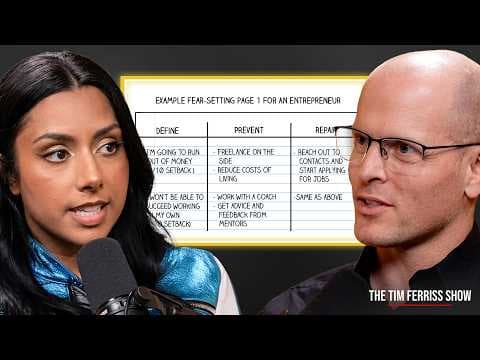
To demonstrate fear setting, a personal anecdote is shared. A fan, who is a guest, brings out a treasured copy of "The 4-Hour Workweek" from 2016. This book was instrumental in their life, recommended by their therapist, Jodie. The guest then reads excerpts from their own fear-setting exercise, conducted before the formal "define, prevent, repair" chart was popularized in a 2017 TED Talk.
The exercise begins with defining the "nightmare." For the guest, this included going broke, never discovering their best talent due to a tendency to try everything, people not finding them funny, and ultimately, not being funny themselves.
The next step involves outlining actions to "repair the damage." This included utilizing savings from a Google internship and ensuring their resume and LinkedIn were updated for potential jobs in the industry. The guest also detailed how they would regain financial control if fired, by temporarily using savings and aggressively applying for other jobs, even listing specific companies to contact.
A particularly intense part of the exercise addresses what is being "put off out of fear." The guest admitted to postponing quitting their current job and reaching out to contacts crucial for realizing their dream. This hesitation stemmed from the need to vocalize their aspirations and the fear of rejection. The cost of this postponement was significant, including emotional high stress, a desire to tell stories that resonate, and a yearning to be in a creative environment that values quality, contrasting with their current unhappy situation.
The final section asks, "What are you waiting for?" The guest identified waiting for a false sense of security, such as a brand collaboration or financial stability, rather than creating their own security. They realized they had always found success by adhering to others' definitions of success but had never found happiness because they hadn't designed their own rubric. This was due to a lack of self-trust and a fear of taking responsibility for defining their own success.
The guest emphasizes that fear setting is a deeply personal process, and those who have undertaken it can empathize with its intensity. The guest, being an emotional person, found the exercise to be very real and impactful.
A humorous and unexpected twist is revealed. The "4-Hour Workweek" book, which had been on the guest's bookshelf for ten years and was heavily annotated, surprisingly had no markings from this specific fear-setting exercise. The mystery was solved when the guest found an email to their therapist detailing the exercise. It turned out the book was "stolen" – borrowed and never returned – from a coworker. The guest expressed remorse to the unknown original owner, noting they had since purchased all of Tim Ferriss's other books, thus contributing to the economy. The irony is that the person who unknowingly facilitated this profound personal breakthrough remains unknown, highlighting how impactful actions can be, even when the giver is unaware.