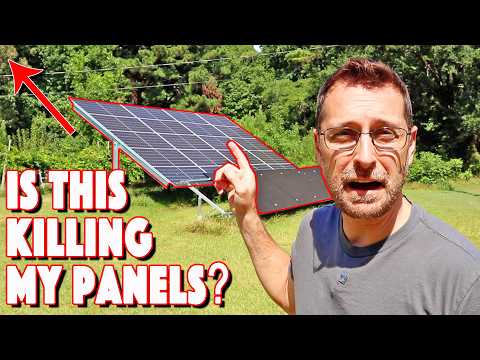
What Happens To Solar Panels In Extreme HEAT? (And How To Detect Problems)
AI Summary
Solar panel efficiency is significantly impacted by extreme heat due to the properties of semiconductor materials. Higher temperatures decrease the energy gap, causing open circuit voltage to drop and panel efficiency and power output to decline. Monocrystalline panels typically lose 0.3-0.5% efficiency per degree Celsius. On a 105°F day, panels can reach 150°F, resulting in a 15-20% power loss.
The presenter observed a 40% loss from their 12,500-watt array, indicating an issue beyond temperature. Troubleshooting involves checking for broken panels, loose connections, cut wires, or tripped breakers. A thermal camera, like the Thermal Master Thor 2, is crucial for identifying hot spots on panels or wiring, which signal internal problems.
During inspection, the presenter found a significantly warmer central breaker for a 12-panel string and a "white hot" MC4 connector, indicating a connection problem. This heat transferred over 100 feet to the inverter. Cooling panels with a sprinkler reduced their temperature by 50°F, from 150°F to 100°F, suggesting improved efficiency. The faulty MC4 connector will be replaced.
Get summaries like this automatically
BriefTube monitors your YouTube channels, generates AI-powered audio summaries, and delivers them wherever you listen. Telegram, Discord, Slack, or your podcast app. Fully automated.
Start Free Trial