Dappled Forest Update with VIEWERS!
Audio Summary
AI Summary
The livestream discusses a new Minecraft snapshot released on June 23rd, which includes a dappled forest, abandoned camps, red shrubs, shelf mushrooms, and other new features. The host, Ray, and a guest are exploring these new additions, testing their mechanics, and discussing their implications for farming and gameplay.
Ray mentions having just finished a video review of the new snapshot, which he quickly produced. He explains his process for creating YouTube videos, which involves recording gameplay and voiceovers, then editing in Premiere Pro for cuts and basic effects, and finally using DaVinci Resolve for more advanced titles and information. He also talks about his metric for video success: achieving 1,000 views within the first hour. His current video, at 1,100 views in 1 hour and 21 minutes, is performing well.
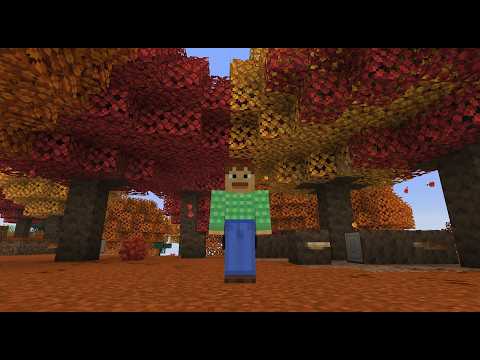
The discussion moves to the new in-game items. They test the new "Poppler" tree saplings, noting their average size, similar to oak trees. They successfully grow a Poppler tree, observing its cool appearance with orange leaves. The server is updated to the latest snapshot to allow viewers to join and test the new features. Ray plans to release a video about a step-by-step cube farm that he previously couldn't due to the unexpected early release of this snapshot.
The conversation touches on an issue with YouTube's reporting system, where some content creators are reportedly being banned without clear reasons, a problem reminiscent of past issues with the system.
They then focus on the new shelf mushrooms, testing their properties. It's noted that when obtained from creative mode, they are always small, but they can naturally grow larger. They test the mushrooms in a void world to observe their growth patterns, discovering that they don't grow naturally unless bone-mealed. This is considered a good thing, as it prevents unwanted changes in builds. The early release of the snapshot is speculated to be due to developers going on summer vacation, wanting to release new content that is less prone to major bugs before their break.
Ray explains the unique hitboxes of the shelf mushrooms. The small mushroom has three pixels of height (one above, two below), and the large one has five pixels (extra pixel above and below). They compare these new block sizes to existing blocks, noting that the small mushroom's hitbox is similar to a baby cocoa bean, which is a useful addition for specific builds due to the limited options for partial blocks at that height. The larger mushroom's hitbox is also measured and compared.
The shelf mushrooms are found to have the same bounciness as beds, suggesting potential for parkour or fall damage reduction. A known issue with growing items like mushrooms via bone meal is that players can clip through larger versions if standing on a smaller one, a problem previously addressed with farmland.
They test the mushroom's attachment to various blocks, finding it attaches to soul sand but not honey or farmland. This means the mushroom is one of the few blocks with a collision that doesn't break farmland, unlike gates which can be moved by pistons.
Ray then calculates how many unique items in Minecraft can be crafted using wood from a tree farm. He counts tools, various block types (stairs, slabs, fences, doors, signs, boats), sticks, and items crafted from sticks (torches, arrows, etc.). After a detailed count, he estimates that 475 unique items require wood in their recipes. Comparing this to the total number of items in the game (1,645), he concludes that almost one-third (29%) of all items in Minecraft utilize wood, highlighting the importance of a tree farm. He also discusses the perception of fractions, noting that "one in four" sounds more impressive to people than "two out of seven," even if the latter is a larger percentage, because it's easier to comprehend.
The conversation shifts to updating the spreadsheet used to track items, incorporating the new Poppler wood and mushroom types. They also discuss the red shrub, which functions similarly to existing bush farms. Ray confirms that he has already developed farms for all the new items.
Later, they investigate the new "abandoned camp" structures, looking for "secret chests" that are mentioned in the loot tables. They use commands to spawn various camp variants and search for hidden chests. Initially, they find mostly barrels or easily visible chests. With the help of a viewer who delves into the game's data packs, they discover that some secret chests are copper chests and are located in specific patterns of gravel or hidden under leaves in certain biomes (Birch, Jungle, Cherry Groves, and a default variant). The Savannah biome also contains a secret chest, which is more visibly hidden.
Ray plans to create a short video showcasing these secret chest locations, crediting the viewer who helped find them. He also reflects on the overall design of these new structures, noting their aesthetic and potential for teaching players about maps and other basic game mechanics. The average spacing of these camps is estimated to be 34 chunks apart, with a separation of 8, meaning they generate on a grid but with random offsets.
The stream concludes with Ray preparing to edit the video about the secret chests and planning future content, including videos on the new farms he's developed. He emphasizes his focus on vanilla Minecraft and his dedication to creating efficient farms for players. He also notes the ongoing need to improve his YouTube thumbnails based on performance metrics.