Pilote americain en Iran
Audio Summary
AI Summary
This video details a complex and politically charged rescue mission for two US Air Force pilots whose F-15E aircraft crashed over Iran. The incident, which occurred two days prior to the announcement, saw both pilots ejecting over enemy territory. The US, along with its ally Israel, announced the successful rescue of the second pilot, emphasizing the principle of leaving no one behind.
The situation presented a critical challenge: the pilots were isolated in hostile territory, and their ejection seats were even recovered. The Iranian authorities, alerted to the presence of the pilots, placed a bounty on their capture, mobilizing the Revolutionary Guard and local militias to search the mountainous region.
One pilot was quickly rescued by US forces. The second pilot, a colonel, managed to evade capture for 36 hours by hiding in the mountains. He had undergone extensive survival training, including how to remain concealed and use specialized radio equipment for location. Despite having minimal rations and water, he successfully evaded the Iranian search parties.
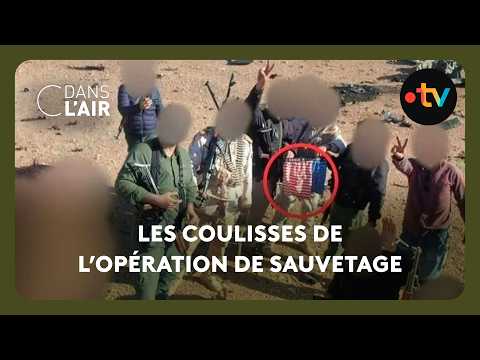
The rescue operation was extensive, involving dozens of aircraft and special forces. American helicopters, including Black Hawks, came under fire from Iranian forces, resulting in the loss of two Black Hawk helicopters and an A10 aircraft. Special forces units, likely including Pararescue Jumpers (PJ's) known for high-risk rescues and combat medical skills, were deployed.
The CIA reportedly located the colonel approximately 20 kilometers south of Isfahan, at an altitude of 2000 meters in the mountains. The operation involved landing aircraft on a makeshift airstrip nearby. According to the New York Times, Navy SEALs were dispatched to extract the pilot from a crevasse. However, the aircraft reportedly became stuck on the airstrip, necessitating the use of other aircraft for extraction. The Americans subsequently destroyed their own aircraft to prevent them from falling into Iranian hands, a fact that Iran highlighted in its propaganda.
Iran criticized the operation, framing it as a desperate move by a "ignorant" US president trapped in a conflict he initiated. The rescue mission resulted in the reported deaths of five Iranians, while the rescued American pilot was seriously injured.
Military analysts discussed the strategic importance of the rescue, noting that the survival of a single soldier held considerable strategic weight for the US. They explained that modern recovery procedures are similar across developed nations, involving immediate alerts and mobilization of resources based on the pilot's location and terrain. The 30-hour duration of the second pilot's rescue was considered lengthy, as probabilities of recovery diminish significantly after 48 hours. The speed of the first rescue versus the second raised questions, as did the significant cost of the operation.
The transcript also touched upon potential disinformation campaigns by the CIA to mislead the Iranians. The rescue’s success, despite Iranian claims of downing helicopters (which analysts suggested were actually planes), was seen as a demonstration of American military dominance. Even in a mountainous region heavily patrolled by Iranian forces, the Americans were able to locate and extract a foreign national from their territory, sending a message of their capabilities. The operation, while challenging and involving an "accident" with the aircraft, underscored the US military's ability to operate effectively even in unfamiliar terrain and against a determined adversary.