AI Audio Summaries
20 videos summarized
1 follower on BriefTube
Last summary: May 22, 2026

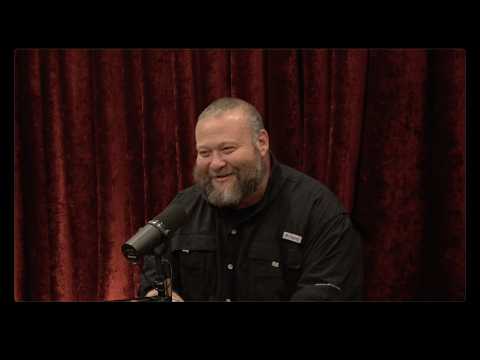
Scott Horton joins Joe Rogan to discuss foreign policy, particularly the US role in global conflicts and the motivations behind American interventionism. Horton, an anti-war advocate and author, critiques the neoconservative ideology that he believes has driven US foreign policy since the post-Cold War era. Horton traces the origins of this ideology back to documents like the Wolfowitz Doctrine, which aimed for permanent US global dominance and the prevention of any nation or alliance challenging American hegemony. He argues that this doctrine has manifested in a neo-colonial approach, characterized by regime change operations and military interventions, rather than genuine nation-building.
Read AI summary
YouTube

The podcast episode features a discussion about the recent UFC fight between Sean Strickland and Hamzat Chimaev, as well as other fighters and related topics. The conversation begins with high praise for flyweight fighter Joshua Van, noting his impressive skill despite only five years of fighting experience. The hosts marvel at his potential, acknowledging he has areas to improve but highlighting his exceptional boxing, potentially the best in the UFC. They compare him to Ilia Toporia and Josh Franco, discussing the rarity of knockout artists in the flyweight division.
Read AI summary
YouTube
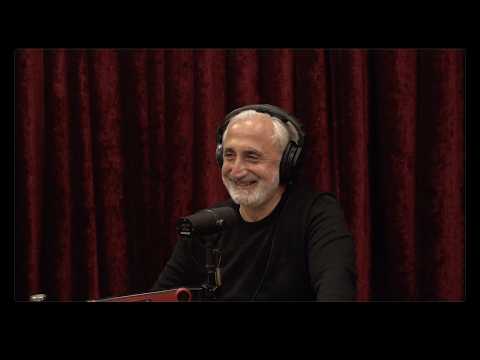
The speaker, a visiting scholar at the University of Mississippi, announced the release of his new book, "Suicidal Empathy," and his permanent move to Oxford, Mississippi. He explained that "Suicidal Empathy" builds on his previous work, "The Parasitic Mind," by exploring how the emotional system can be hijacked, similar to how the cognitive system is targeted by parasitic ideas. He uses the analogy of the "wood cricket," an insect that abhors water but commits suicide by jumping into it when infected by a brain hairworm. The hairworm, a neuroparasite, alters the cricket's brain circuitry to serve its reproductive cycle, overriding the cricket's survival instinct. This phenomenon illustrates "suicidal empathy," where an individual's emotional system is so compromised that they act against their own survival, often out of excessive or misdirected empathy.
Read AI summary
YouTube
Julia Mossbridge, a cognitive neuroscientist and computer scientist, discussed her research into exceptional human performance, specifically precognition and telepathy. She explained that while she has published peer-reviewed papers on these topics, they are often ignored or suppressed within the scientific community. Despite this, she believes these capacities are inherent in people and can be developed. Mossbridge noted that societal fear of being foolish or shamed often prevents individuals from exploring these abilities. She questioned whether culture is shifting towards a better acceptance and use of these natural capacities. Joe Rogan suggested that online conversations, like podcasts, are making a wider range of topics, including these "fringe" subjects, more accessible and are fostering deeper public understanding than traditional media. He emphasized that the internet helps overcome ego-driven resistance in academia and mainstream thought, where career interests often suppress unconventional research. Rogan, as a comedian, stated he doesn't fear being seen as foolish, which allows him to explore diverse topics openly.
Read AI summary
YouTube
The speaker, a Congressman, discusses his long-standing interest in UFOs, sparked by childhood reading and further fueled by an interview with TMZ several years ago that led to global contacts and calls for disclosure. He expresses skepticism about the government's willingness to fully disclose information, citing a history of cover-ups since 1947, and believes they will sanitize any forthcoming reports. His direct experience with the subject began in Congress, roughly eight years ago, when he and others started asking questions and were met with evasiveness. He recounts a meeting where individuals showed him videos of objects flying at impossible speeds and angles, capable of maneuvers that would turn a human into "ketchup." Military pilots who report sightings are often grounded and subjected to psychological evaluations and interrogations, effectively silencing them.
Read AI summary
YouTube
The conversation begins with a discussion about a unique green tectite called moldavite, formed from a meteorite impact in the Czech Republic millions of years ago. The speaker wears it in a case crafted by his wife, using a chain from his father. He also owns a UFC canvas from a fight in London, stained with a fighter's blood, which he had to quarantine for 12 months due to biohazard rules before he could keep it. He questions the logic of such rules, given pre-fight testing. The conversation then shifts to the speaker's past conflict with UFC referee Herb Dean during a Fight Island event. He recounts a late stoppage in a fight between Jai Herbert and Francisco Trinaldo, where Herbert took too many unnecessary shots after being clearly out. The speaker, a martial artist himself, felt a strong urge to protect the fighter. He yelled "stop the fight," which led to Herb Dean confronting him, misinterpreting the situation as the speaker approaching him outside his commentary desk. This miscommunication escalated, with the UFC seemingly siding with Dean and pulling support from the speaker.
Read AI summary
YouTube
The conversation begins with UAP disclosures, with one participant questioning why they are being released now, suggesting it's a distraction. The idea of "indigestible" information is brought up, meaning it would be so crazy if true. The vastness of the universe makes it implausible that other species don't exist, leading to the question of why we haven't encountered them. Historical accounts, such as the Book of Ezekiel and the Mahabarata, are cited as potential evidence of ancient visitations. It is suggested that if advanced beings were to hide, they would do so in the ocean. The discussion then shifts to the concept of a simulation, with the observation that the word "attention" has been central to every technological revolution for the last 30 years. From Google's PageRank algorithm to Facebook and Instagram's newsfeeds, and even the foundational paper for AI ("Attention Is All You Need"), the focus has consistently been on capturing and directing attention. This leads to the question of whether society is stuck in a loop, driven by this singular metric, and if there are other, unexplored ways of doing things.
Read AI summary
YouTube
The podcast features a discussion between Joe Rogan and Ari Shaffir, who has recently returned from an extended period abroad. Shaffir recounts his six to seven months away, including time in Brazil and Ecuador, where he engaged in activities like remote podcasting and exploring local culture, including the traditional South American drink, yerba mate. The conversation then veers into discussions about drug use and its effects. They touch upon unregulated edibles from the past, the subjective nature of dosage, and how potent edibles can lead to surreal experiences, such as feeling detached from reality or perceiving people as two-dimensional. Shaffir shares an anecdote about a disorienting edible experience on a BART train in San Francisco, where he felt like he was underwater. They also discuss the ability to perceive people's true intentions and "souls" when under the influence of psychedelics, though they acknowledge this perception isn't always reliable for factual judgment.
Read AI summary
YouTube
The conversation begins with a discussion about vision and eye health. The speaker mentions having astigmatism and using different glasses for driving and computer use. They then share an experience where using red light therapy, along with a macular support supplement, helped them reduce their reliance on glasses for reading small print. While their eyes aren't perfect in low light, they no longer need glasses for everyday tasks. This leads to a humorous tangent about dark restaurant lighting and the speaker's children being able to read menus easily. The conversation shifts to a more serious topic as the speaker reveals they had a heart attack three months prior, during Super Bowl weekend in Atlanta. They recount the experience with humor, noting that their coping mechanism for trauma is often jokes. This lighthearted approach was not appreciated by the surgeon, who was about to insert a stent. The speaker describes being heavily drugged during the procedure but still making jokes, including a running gag about a doctor named "Doug" who promised to stay with them but disappeared. The surgeon was also reportedly annoyed by the patient's involuntary hand movements, which the patient attributes to a subconscious reflex to protect their groin during the procedure.
Read AI summary
YouTube
The conversation begins with a discussion about Richard Weiss, the designer and architect behind both the Flying Guillotine bar and the Mothership. The host mentions having a Flying Guillotine t-shirt, while the guest, RZA, wore his recently to a screening of his film at the Alamo Drafthouse. RZA then asks Joe Rogan about his past use of a hyperbaric chamber or sensory deprivation tank at his Woodland Hills location, eight years prior. Rogan clarifies that he had a sensory deprivation tank at the studio but currently has a hyperbaric chamber at home. RZA expresses his admiration for Rogan's unique consciousness and wonders if he maintains certain practices as he evolves. Rogan admits that sometimes he gets caught up in momentum and needs to step back and realign, finding that vacations help with this. RZA relates, sharing his own experience of being too busy to exercise and relying on daily stretching and Tai Chi to maintain his well-being.
Read AI summary
YouTube

The guest, a musician and actor known for his role in Yellowstone, discussed his appreciation for the Austin and Hill Country community, which he credits for supporting his music career. He contrasted this with his experience in California, expressing a preference for the "real people" and strong community in Texas. He also mentioned his current process of moving back to Texas after living in Topanga Canyon, Los Angeles, for years, noting a sense of relief when crossing the state line back into Texas. He recounted his time working on the show Yellowstone in Montana, describing it as an easy job due to his character's smaller role, which allowed him ample time for fly fishing and exploring the mountains. He praised Montana's natural beauty, calling it a spiritual place and "nature's art," capable of evoking a profound, almost drug-like feeling. This led to a discussion about a hunting guide school he attended in Montana, an experience he described as life-changing. He learned essential wilderness survival skills, emphasizing the importance of heightened senses and self-sufficiency away from modern distractions. He shared an anecdote about a fire-building drill where an Alaskan classmate demonstrated superior knowledge of how to quickly start a large fire in wet conditions using dead pine branches, highlighting the value of practical wilderness skills. The conversation also touched on alternative kindling, such as Fritos, due to their oil content, which proved useful during a wet hunting trip in Alaska.
Read AI summary
YouTube
The podcast features a conversation between Joe Rogan and comedian J.D. MacCathan, an Australian comedian who recently moved to America. MacCathan recounts his initial difficult experience in the U.S., including being fired from a Catholic podcast job shortly after arriving with his family, leaving him stranded in Stubenville, Ohio, with no income and financial worries about returning home. He describes the confronting environment of the town and the surrounding Appalachian region, noting encounters with poverty, drug addiction, and street prostitution. His journey to establish himself as a comedian in the U.S. was arduous. He took a bus trip from Pittsburgh to Cleveland to open for comedian Sam Talent, a journey that exposed him to unsettling situations, including a woman offering free phones to people on benefits, which she assumed he was due to his presence at the bus station. He also shared a bus with a man experiencing a psychotic episode.
Read AI summary
YouTube
The podcast episode features Joe Rogan and guests discussing a wide range of topics, starting with a carved woolly mammoth tooth, which leads to a conversation about the various uses of mammoth ivory, such as knife handles and piano keys. They then transition to discussing male accessories, with watches being highlighted as the most acceptable form of male jewelry. This sparks a discussion about tattoos, with the Tasmanian devil and barbwire designs being mentioned as popular choices in the past, and the unacceptability of ankle jewelry for men. The conversation shifts to travel and vacation preferences, emphasizing a desire for a relaxed, unstructured experience centered around food. This leads to a discussion about Mexico City and the ancient site of Teotihuacan, noting the city's high altitude and its potential impact on physical performance. A recent shooting at Teotihuacan is brought up, highlighting the dangers that can arise even in tourist locations.
Read AI summary
YouTube
The discussion opens with anecdotes about managing alcohol consumption, particularly in environments like comedy clubs, leading to a broader conversation about different performance venues. Performing for 20,000 people is described as less nerve-wracking than a small, half-filled club, where audience disappointment is more palpable. The larger spectacle of an arena show, with an excited crowd, creates a more enjoyable atmosphere. This leads to a reflection on how personal taste dictates enjoyment, with the internet often fostering negativity towards things that simply aren't for everyone. The internet's role in shaping opinions, demanding instant "hot takes," and discouraging nuanced reflection is highlighted as a significant cultural shift. The conversation transitions to the importance of evolving one's opinions, with the speaker embracing the idea of "flip-flopping" as a sign of growth and learning. In public discourse, this willingness to admit being wrong, especially when new information emerges, is presented as crucial for credibility, contrasting with the common internet tendency to double down on initial stances. The internet, while offering a platform for everyone, is also seen as a source of constant distraction, limiting opportunities for genuine reflection that were once common in pre-internet life.
Read AI summary
YouTube
John Fogerty, a legendary voice in rock and roll, shared insights into his career, struggles, and creative process. He recounted a story about getting out of military service by losing weight and smoking marijuana, which, while not entirely accurate in sequence, contained elements of truth. His music, particularly hits like "Fortunate Son" and "Bad Moon Rising," continues to resonate across generations, even being used as walkout songs by UFC fighters. Fogerty discussed the early days of his career, including signing his first record contract at 19, which he later discovered was unenforceable. He was one of the first rock artists to openly address being exploited by the music business, notably with his song "Zance Can't Dance," which he was forced to change to "Vance Can't Dance" by Warner Brothers.
Read AI summary
YouTube
Spencer Pratt, a candidate for Mayor of Los Angeles, explains his motivation for running, stemming from his personal experience with the devastating 2018 Palisades fires, which destroyed his home and those of his neighbors. He alleges a cover-up of negligence and mismanagement by city officials, arguing that the narrative blaming climate change and hurricane-force winds was a distraction. Pratt criticizes the fundraising efforts for fire victims, claiming that hundreds of millions of dollars raised were largely absorbed by non-profit overhead rather than directly helping those who lost their homes. This experience, he states, opened his eyes to what he describes as a "homeless industrial complex" and a system of organized crime and fraud. Pratt contends that billions of dollars allocated to combat homelessness are being siphoned off through scams, inflated salaries for non-profit executives, and outright theft. He highlights a specific case where a senior housing complex was bought for $11.2 million and then sold for $27.3 million using taxpayer grant funds, with the developer facing federal charges for fraudulent documents. Pratt emphasizes that this is not just about salaries but direct theft, citing cases of individuals arrested for stealing millions and purchasing luxury assets.
Read AI summary
YouTube
The podcast episode features Joe Rogan in conversation with an author, discussing the author's new book, "Drownproof." The author emphasizes that success is a collective effort, not solely individual achievement, and that surrounding oneself with exceptional people is crucial for growth. He highlights that his podcast, the Joe Rogan Experience (JRE), grew organically by following his interests and instincts, rather than through meticulous planning. A significant portion of the conversation revolves around the alpha-gal syndrome, a tick-borne illness causing red meat allergies, and its emerging prevalence. This leads to a discussion about how tick bites can trigger such reactions, drawing parallels to Lyme disease and its potential origins from bioweapons research on Plum Island. The conversation then shifts to the topic of pain tolerance and resilience, sparked by a description of a brutal Kenyan initiation rite. The author argues that enduring extreme hardship at a young age can build exceptional pain tolerance, potentially contributing to success in demanding fields like marathon running.
Read AI summary
YouTube

The conversation opens with a recollection of a past encounter involving Tommy Lee, who wanted to meet the speaker. This led to attending a Rock and Roll Supernova concert in Long Beach, where Tommy Lee's green room was described as an "after-hours party." The discussion then shifts to Tommy Lee's relationship with Pam Anderson and Kid Rock. A story is shared about Kid Rock sucker-punching Tommy Lee at an MTV awards event, prompting Tommy Lee to express a strong desire for a fight, even asking the speaker to train him. The speaker advised Tommy Lee that either fighting and winning, or Kid Rock backing out, would result in a win. Tommy Lee's management reportedly tried to arrange a pay-per-view fight, but Kid Rock's team declined, fearing reputational damage for the loser, given their tough-guy rock and roll images. The conversation then transitions to MMA, specifically mentioning a fight between Stephan Bonner and Forrest Griffin, which was so close that Dana White, the UFC president, gave both fighters a bonus. The speaker suggests that "The Ultimate Fighter" reality show was crucial in preventing the sport from fading out. Diego Sanchez is brought up as a formidable fighter, often underestimated in his later career compared to his prime, known for his toughness and cardio. BJ Penn is highlighted as an "unstoppable" fighter in his prime, particularly when training with the Marinovich brothers, known for his incredible conditioning. The speaker considers him the best 155-pound fighter of all time. The discussion touches on BJ Penn's dedication, noting that his focus sometimes wavered due to his lifestyle and popularity in Hawaii.
Read AI summary
YouTube

This discussion revisits the experiences of Bob Lazar, a physicist who claimed to have worked on reverse-engineering alien technology at a secret facility called S4. A new film recreates Lazar's experiences using a blend of CGI and AI, with 90% being handmade CGI. The de-aging of Lazar in the film involved scanning his face and creating a digital model at different ages. The craft, environment, and personnel in the film were all meticulously recreated, some by real actors. Lazar found the recreation mind-blowing, feeling as if he was teleported back to S4, and noted that the film accurately depicted what he saw. Lazar's story, first shared in the late 1980s, has remained consistent over the years. Recent events, such as the New York Times story and videos showing craft movements similar to his descriptions, have lent credibility to his claims. He expressed that while many doubt him, his consistent and detailed account over decades, coupled with the intimidation tactics he and others faced, suggests his truthfulness. Lazar described his initial shock upon realizing the craft was not of human origin, despite initially seeing an American flag on it. He explained that his supervisor, Barry, clarified it was an alien craft. The facility's directives were to duplicate the technology with available materials and to be able to disable it remotely.
Read AI summary
YouTube

The discussion opens with concerns about copyright enforcement on platforms like YouTube, where humming a copyrighted song can lead to demonetization. This leads to a broader, speculative conversation about the future, including AI companions and the potential for robots to become integrated into human relationships. The hosts joke about the absurdities of such a future, where robots might require daily "maintenance" to stay alive, and the social implications of such technology becoming commonplace. They predict that within 5 to 10 years, AI companions will be a reality, and even suggest that future generations might engage in relationships with robots, just as current generations are drawn to social media. The conversation then shifts to the increasing prevalence of autism, with a hypothesis that it might be a "feature" rather than a flaw, potentially serving as a mechanism for human evolution to merge with machines. The hosts suggest that the rise in autism, coupled with capitalism and the widespread use of chemicals and pollutants, could be leading humanity towards a future where empathy and emotions are reduced, making individuals more suited to a data-driven, technologically integrated society. They point out that many high-level tech professionals are on the autism spectrum, implying a connection between this trend and the development of AI.
Read AI summary
YouTubeBriefTube monitors your YouTube channels, generates AI-powered audio summaries, and delivers them wherever you listen. Telegram, Discord, Slack, or your podcast app. Fully automated.
Start free trial