CERN
AI Audio Summaries
3 videos summarized
2 followers on BriefTube
Last summary: Apr 24, 2026
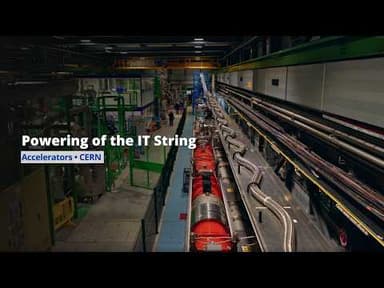
CERN’s full-scale test stand enters the powering phase
Here are the key points from the transcript: * **IT String Facility:** This is a test stand for the High-Luminosity LHC project at CERN.
Read AI summary
YouTube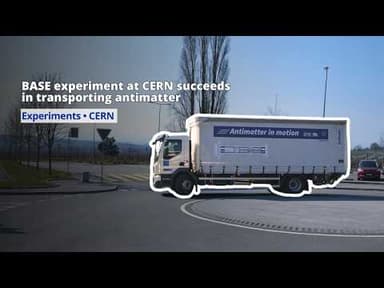
BASE experiment at CERN succeeds in transporting antimatter
Scientists have successfully transported antimatter, specifically antiprotons, out of a facility for the first time. This achievement opens up new possibilities for precision measurements outside of CERN. Antiprotons are antiparticles of protons, meaning they are identical but have opposite properties like charge or magnetic moment. They do not naturally exist in the observed universe, making their production, storage, and transport challenging. The transport involved 92 antiprotons in a Penning trap, which had to be kept autonomous, cold, and on batteries while maintaining a vacuum. Although 92 antiprotons are a minuscule amount compared to the protons in a grain of salt, these particles are sufficient for ultra-high precision investigations due to the sensitivity of the experiments. This technology acts as a new type of precision microscope for antimatter, enabling fundamental symmetry tests and searches for physics beyond the standard model, potentially explaining why the universe is predominantly made of matter rather than antimatter.
Read AI summary
YouTubeGet automatic AI summaries for all your channels
BriefTube monitors your YouTube channels, generates AI-powered audio summaries, and delivers them wherever you listen. Telegram, Discord, Slack, or your podcast app. Fully automated.
Start free trial