
AI Audio Summaries
3 videos summarized
4 followers on BriefTube
Last summary: Apr 17, 2026
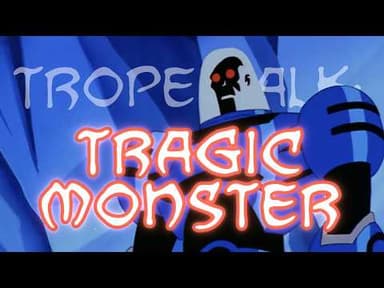
The video explores the concept of characters, particularly villains, being the "hero of their own story," not in the sense of always believing their actions are good, but rather that they see their actions as justified, understandable, and narratively coherent within the context of their lives. This internal perspective allows individuals, even those who commit heinous acts, to maintain the belief that they are the protagonists of their own narratives, sometimes simply because they consider themselves the most important person whose feelings matter. This idea is particularly relevant when developing antagonists in storytelling. While heroes are often reactive, villains, to be compelling, need motivations that are more than just inherent evil. Creating a villain who is both extremely villainous and relatably human is a challenge because, in reality, we struggle to reconcile the capacity for great evil with human complexity. It's easier to categorize such individuals as inhuman monsters rather than acknowledging the potential for cruelty within human nature. However, the transcript argues there's no inherent contradiction: people can perform terrible acts if they feel justified. Even a simple motivation like "because I wanted to" can suffice, but a more complex villain will have deeper reasons for their actions, making them appear as the nuanced protagonist of their personal drama. These reasons can be logical, emotional, moral, or ideological, as long as they make sense to the villain. When these reasons also resonate with the audience, perhaps evoking sympathy or pity, the character's cruelty highlights the human motivations behind it, blurring the lines between "real people" and "monsters." This forces us to see the monster and the person as one, potentially prompting introspection about our own capacity for similar actions. Villains who are allowed to be the heroes of their own stories, especially tragic ones, become compelling figures, referred to as "Tragic Monsters."
Read AI summary
YouTube

BriefTube monitors your YouTube channels, generates AI-powered audio summaries, and delivers them wherever you listen. Telegram, Discord, Slack, or your podcast app. Fully automated.
Start free trialThe video introduces "The Veneziad," a project that began during the speaker's senior year of college as a creative writing capstone class. Having completed his main degree requirements and transitioning to full-time work, the project was undertaken for enjoyment. A friend suggested adapting "The Aeneid," an idea the speaker found appealing. He aimed to capture elements like epic poetry's writing style, a historical setting, plots of journeys and war, and characters serving as metaphors for their cultures. To find a topic, he compiled a three-page list of historical settings featuring journeys and wars. Despite the initial "overkill" in topic generation, he narrowed it down to settings he felt confident writing about within a semester, settling on Venice. Specifically, he chose a lesser-known 14th-century war that had a significant, albeit indirect, influence on Venetian history. The original story concept was divided into half journey and half war, with characters starting elsewhere and returning to Venice to fight and protect it. Recognizing that narrative travel time could be "boring," he decided to give the characters something to discuss during their journey. This led to placing them on the far side of the Black Sea and having them sail back across the entire Venetian world, passing island dominions and historical locales like Constantinople. This transformed the journey into a reverse travelogue, allowing characters to discuss the histories of Marco Polo, the Fourth Crusade, the Greek islands, the Adriatic, and the Venetian lagoon, moving backward in time towards Venice's origins. This provided narrative depth beyond a simple scene transition and established historical context for the stakes upon their return.

Read AI summary
YouTube
The current year has been productive, starting with a road trip in January and attendance at a couple of conventions. "Aurora Volume 2" is releasing this month, with preliminary copies already received. More time has been available for channel activities, including streaming a fresh file playthrough of Hades on Tuesdays, which also serves as a UNICEF fundraiser. There's been involvement in other podcast projects, such as guesting on "Movie Struck" for an episode on "Muppet Treasure Island." The D&D podcast, "Rolling with Difficulty," recently concluded season two of its third campaign, which was described as challenging. Last month, a cat named Wolf, a sweet gray stripey cat, was adopted. The speaker previously didn't feel they had enough time for a pet but now has the space to provide the necessary attention. This year has offered valuable time to breathe and engage in other life activities.
Read AI summary
YouTube