

ScienceEtonnante
AI Audio Summaries
2 videos summarized
1 follower on BriefTube
Last summary: Sep 4, 2026
![La Cryptographie Quantique — [Le protocole BB84]](https://img.youtube.com/vi/V35v6HjG67U/hqdefault.jpg)
La Cryptographie Quantique — [Le protocole BB84]
This video discusses quantum cryptography, a field recently recognized with the Turing Award given to Charles Bennett and Gilles Brassard for their pioneering work. The Turing Award is considered the Nobel Prize of computer science. The video aims to explain the cryptographic methods Bennett and Brassard developed to secure communications using unique quantum properties like superposition and entanglement. To understand quantum cryptography, it's essential to first grasp the basics of traditional cryptography. When sending a message over a potentially insecure channel, such as the internet, sensitive information is encrypted—transformed into incomprehensible gibberish—before transmission. The recipient then decrypts it using a shared encryption key. This key is typically a long string of numbers or characters that acts as a parameter for both encryption and decryption operations. If only the sender and receiver know the key and it's sufficiently complex, their communication remains secure.
Read AI summary
YouTube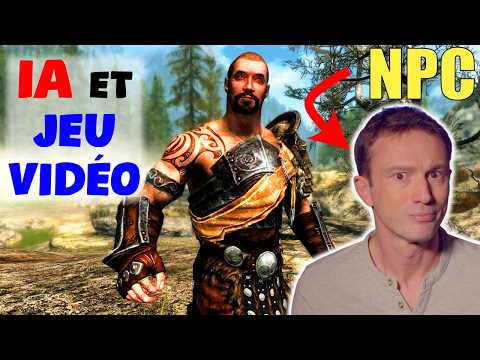
L'intelligence artificielle dans les jeux vidéo
The speaker, having worked in the video game industry for seven years, was initially surprised by the use of the term "AI" within this field. While typically associated with neural networks, deep learning, and language models, in video games, "AI" generally refers to the systems managing the behaviors of non-player characters (NPCs) such as enemies, allies, and passersby. Developers primarily use techniques for these NPCs that differ significantly from modern artificial intelligence, which is the focus of this discussion. Before delving into video game AI, it's helpful to understand the historical context of artificial intelligence. AI, almost as old as computer science itself, aims to enable machines to perform cognitive tasks typically done by humans. As early as the 1950s, with the advent of conditional programming (if-then statements), rudimentary programs could simulate decision-making behaviors. This involved mapping human decision processes and replicating them in code, leading to what is known as symbolic AI. In symbolic AI, everything the machine is meant to do is explicitly programmed or can be linked to precise instructions, often with the help of domain experts. A famous example is the Eliza chatbot from 1966, which could simulate conversations by analyzing human input and reformulating questions based on precise rules.
Get automatic AI summaries for all your channels
BriefTube monitors your YouTube channels, generates AI-powered audio summaries, and delivers them wherever you listen. Telegram, Discord, Slack, or your podcast app. Fully automated.
Start free trial